Glee.

About GLEE

An NFT that behaves
like a living thing.

GLEE is a collection of 3000 generative gradient artworks built on OpenSea Seadrop with fully custom onchain metadata. Every piece is produced entirely by a smart contract, stored entirely onchain, and shaped by the trading behavior of everyone who holds the collection.

It's not a JPEG. It's not art that happens to be tokenized. It's a programmable object that evolves in response to real market activity — and the people who hold it are the ones who shape what it becomes.

What it is

Generative. Onchain. Yours.

01

Generated entirely onchain.

The contract is the artist. There's no off-chain renderer, no IPFS link, no metadata API. Every GLEE's gradient — its colors, spread, layering — is computed and stored by the smart contract. Close this website. Your token still exists and still renders.

02

Unique by construction.

Each token ID produces a distinct visual signature. The algorithm selects hues, radial spread, and gradient composition at mint time. No two GLEEs share the same output — not because of randomness added by a reveal, but because the math makes it impossible.

03

Programmable by design.

GLEE uses the actual capabilities of the ERC-721 standard — not just for ownership, but for behavior. Transfers change the visual. Market activity changes the visual. The contract has mechanics that most NFT projects leave permanently unused.

The decay mechanic

Trading changes
everyone's art.

A single decay clock runs across the entire collection. Every transfer — by any wallet, of any token — advances it. The faster the collection has been trading recently, the larger the jump. And if a specific token has been changing hands repeatedly, it gets an additional amplifier on top of that.

As the clock advances, every GLEE's gradient desaturates — starting from the outer edges and working inward, ring by ring, until the piece reaches its terminal form. The transformation is smooth, continuous, and collective. You don't decide when it happens. The market does.

This isn't a metaphor. It's a formula baked into the contract: your trading behavior, and everyone else's, is the input. The art is the output.

Global pressure

How actively the whole collection has been trading

Token pressure

How recently this specific token has changed hands

Combined effect

The two multiply — hot tokens in an active market decay fastest

Terminal state

100% decay changes the visual permanently, until a reset
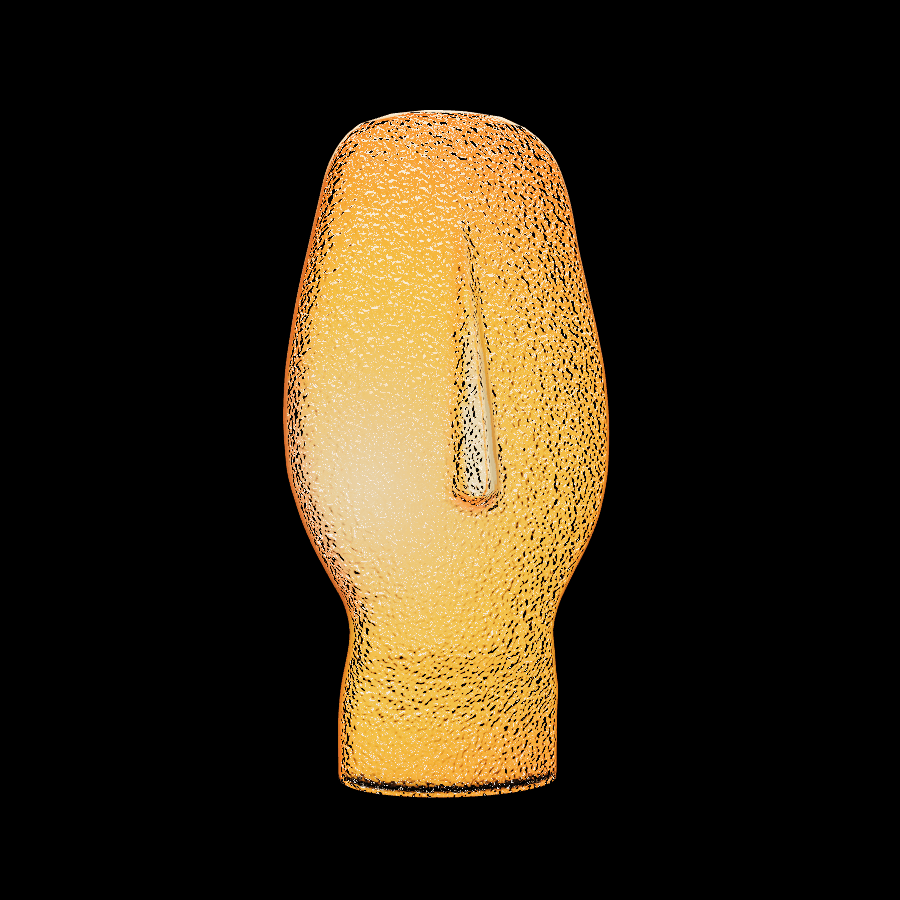
Decay at 0%
0%
Decay at 25%
25%
Decay at 50%
50%
Decay at 75%
75%
Decay at 100%
100%

The lock

Freeze what you love.

At any point, a holder can lock their GLEE. The gradient freezes in place — permanently. Future transfers still work; the token can still be bought and sold. But the visual stops responding to the decay clock from that moment forward.

This is a choice, not a default. Some holders will want to preserve a gradient they find beautiful. Others will let it decay all the way to terminal and hold the final state as a record of the collection's history. Neither is wrong.

The reset

It doesn't end.
It begins again.

When the decay clock reaches its terminal point, it doesn't stay there. A reset mechanic exists — one that returns the clock to zero and restores every GLEE's gradient to its original generated form. The cycle starts over.

What action triggers the reset is still being decided — by the community. What matters is that the power exists, and it belongs to the people who hold the collection, not to whoever deployed the contract.

This makes GLEE a collection with no defined end state. It can decay and reset indefinitely. The art is always in motion. The question is just how fast, and who chooses to intervene.

Why it's different

Not another generative collection.

Most generative NFTs are static the moment they're minted.

GLEE changes every time it moves. You don't know what it'll look like in six months.

Most collections use IPFS. That's a dependency that can disappear.

GLEE has no external dependencies. The contract generates the art. That's it.

Most collection mechanics are cosmetic. Rarity, traits, tiers.

GLEE's mechanics are behavioral. The market is the artist. You're participating in it.

Most 'dynamic' NFTs are controlled by an admin key.

GLEE's evolution is deterministic. No one controls it — not even the team.

Questions

Common questions.

What happens to my locked GLEE when the collection resets?

Locking only freezes the rendering — it doesn't remove the token from the decay system. A reset brings the decay clock back to zero for the whole collection. Whether a locked token's visual updates from a reset is a design decision we haven't finalized yet.

Can I mint more than one?

Yes. Each token is independent. You can hold as many as you want. Each one carries its own transfer history on top of the shared global clock.

What does 'fully onchain' actually mean?

The SVG is generated by the contract at read time. No API. No IPFS hash. No server. If you call tokenURI() directly on the contract, you get the full data URI back — the art is in the response, not linked from it.

Does trading my GLEE affect other people's tokens?

Yes. Every transfer advances the shared decay clock. The effect is proportional — one transfer doesn't change much — but high trading volume across the collection accelerates decay for everyone.